
The Nokomis Collection
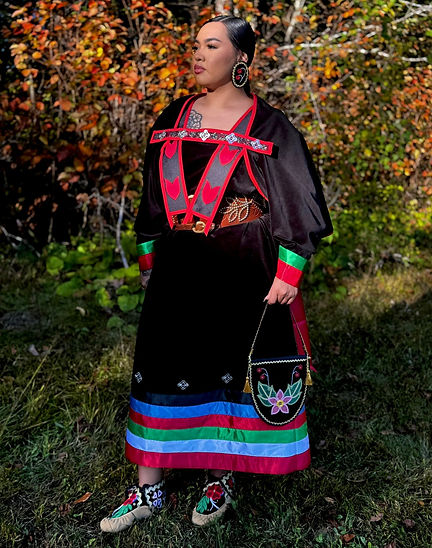
The Nokomis Collection honors the history of Ojibwe women’s dresses, celebrating the utilitarian beauty and cultural significance within each piece. This collection reflects both the artistry and resilience of our grandmothers through various styles of dresses, each with its own story. Every piece was made with love and good intentions, remembering the past and thinking of the present and future. I put thought into this collection, and I’m excited to share it all in its entirety. I put blood sweat tears into this over many sleepless nights. This collection taught me the value of time.. I will now never ever rush anything again. but truly, I value integrity and time differently after the collections completion. Enjoy.
Pre-Contact Era
In the time before European contact, Ojibwe women crafted dresses from the natural materials found in their surroundings. Utilizing animal hides and woven plant fibers, these dresses were designed for functionality, providing warmth and protection. They were also adorned with beads and quillwork, reflecting the identity of the wearer. Each dress was representative to the artistry and resourcefulness of Ojibwe women, with pieces like this Velvet Strap Dress representing this era.
Post-Contact Era
As European settlers arrived in the 17th century, the landscape of Ojibwe clothing began to shift. The introduction of trade goods brought new materials such as cotton, wool, and velvet allowing for more intricate designs. Dresses evolved into more elaborate forms, featuring vibrant fabrics and detailed beadwork that incorporated European influences while retaining traditional elements. This blending of styles created unique expressions of Ojibwe identity, especially during the 19th century when ornate decorations became more prominent, showcasing the creativity of Ojibwe artisans. Each dress was representative to the artistry and resourcefulness of Ojibwe women, with pieces like this Velvet Strap Dress representing this era.
Reservation Era
During the reservation era in the late 19th and early 20th centuries, Ojibwe communities faced significant challenges, including cultural suppression and loss of traditional practices. Despite these hardships, Ojibwe women demonstrated remarkable resilience, continuing to create and adapt their garments. This period saw a revival of cultural expressions as women began to reclaim their heritage through clothing and ceremonies, setting the stage for what would become the jingle dress.
Jingle Dress Era
Emerging in the early 20th century, the jingle dress was created as a response to the challenges faced by the Ojibwe community, particularly during a time of healing following the traumatic experiences of colonization. In our oral traditions, it is said that a man dreamed of a woman dancing in a dress adorned with jingles, which brought about healing for his ill daughter. The jingle dress symbolizes resilience and cultural revival, incorporating both traditional elements and modern influences. Its ceremonial significance continues to inspire and connect Ojibwe women to their community and the healing process. The dress has evolved from sacred ceremonial dresses to dresses used at powwows by all native tribes. The sacred jingle dress healing ceremony is still practiced today.
Modern Day
Today, the spirit of the Nokomis Collection lives on in modern Ojibwe dresses, which are often showcased at powwows and cultural gatherings. These dresses represent a beautiful fusion of tradition and contemporary fashion, celebrating personal style while honoring ancestral roots. Each garment tells a story of resilience, identity, and the revival of Indigenous culture, reminding us of the strength and wisdom of our grandmothers.
Featured Pieces
This collection features a diverse display of dresses, each symbolizing the connection to generational knowledge
Velvet Strap Dress: A luxurious piece that combines the softness of velvet with traditional design elements, perfect for both ceremonial occasions and everyday wear.
Ribbon Skirts and Dresses: Vibrant garments that reflect the significance of color and movement, celebrating the connection to the earth and our community.
Original Style Jingle Dresses: Four beautifully crafted original jingle dresses, highlighting the ceremonial importance of these garments, adorned with metal jingles that create a distinctive sound, symbolizing joy and celebration. Each dress has matching beadwork sets, representing the beauty of beadwork and how Ojibwe women perceive the world around them.
Contemporary Jingle Dress: A modern take on the traditional jingle dress, blending contemporary design with cultural significance, allowing for personal expression while honoring our heritage. This Versace inspired dress is a modern piece that honors the essence of the jingle dress and birch bark biting and etching.
Modern Gala and Prom: Inspired Ribbon Skirts and Dresses: Four exquisite pieces designed with elegance in mind, merging traditional ribbon skirt elements with contemporary fashion, ideal for special occasions while celebrating Ojibwe design.
The Nokomis Collection was inspired by my great grandmother, Anikoogaabo’ikwe & my daughter, Ozhaawashko Bineshiiyens Egoozid.
Nancy was born to William Hart, known as Niigaanigiizhig, Leading Sky, And her mother Ozawandib, from Mille Lacs.
Nancy was of the Bear Clan, a Mide woman of the 8th degree, Ogema-Quay of the big drum, a Medicine woman.
As a young girl, Nancy resisted boarding school's command & sent to Catholic institutions, but escaped. Her defiance, a testament to her strong spirit. Her legacy lives on in my heart forever. She is the embodiment of strength and grace. Although I never met her, I get to know her and appreciate her from what my grandfather Bawdwaywidun recorded and remembered. My family’s blood encompasses the lands of Lac Courte Oreilles (LCO), St. Croix, and Mille Lacs. While we carry connections to various places on Turtle Island, our roots in Ojibwe land run deep.
I’m blessed and thankful I get to pass on knowledge of our family lineage to my daughter.


The connection between grandmother, mother, & daughter is a beautiful connection that can never be severed. The wisdom’s and strength that is passed down from generations is apparent when I see my daughter embodying our Anishinaabe values. My daughter is strong in her identity and that is because of my own grandmothers who ensured she would know who she is. This collection honors that first and foremost. Miigwech for taking the time to read and understand how it came to be.
This strap dress marks my very first creation in this traditional style. Before European contact, our ancestors crafted these garments from deer hide. While the ingenuity behind this design was nearly lost to history, it is now being revitalized. This revival is guided by the memory of my grandfather and the dedicated work of incredible women like Siobhan Marks, who have fought to ensure this dress is remembered correctly.

The arrival of European settlers in the 17th century brought new materials and ideas, transforming traditional clothing. Ribbon dresses and skirts became vibrant canvases for artistic expression, showing bold colors and unique designs. Ribbons, arranged in striking patterns, became a key part of Ojibwe identity, especially in the 20th century. Each piece blends traditional and modern styles, symbolizing pride, with the Ribbon Skirt embodying the creativity of Ojibwe women.
created the Slippery Elm dress as a tribute to this special tree, known for supporting women during childbirth. Our ancestors understood the healing power of plants, and Slippery Elm connected us to the earth and each other.
As I designed the dress in shades of green and earthy textures, I felt the strength of generations of women flowing through me. This piece honors Slippery Elm and my beautiful daughter 💚🌿, celebrating the sacred journey of motherhood and our enduring teachings.

The beautiful Natalie Deanda wearing the black jingle dress of the 4 jingle dresses in the Nokomis Collection. 🖤✨
The black dress symbolizes darkness and the unknown, while also reflecting the vastness of the night sky and the brilliance of the stars that guide us. It invites contemplation of the mysteries that lie beyond our understanding. 🖤✨
When I think of the night sky, I think of the great mystery of the Creator, the stars, the sky and everything beyond. This dress is a physical manifestation of these thoughts of mine.

The beautiful Victoria Gokee, Memegwesiikwe, wearing the blue jingle dress of the 4 jingle dresses in the Nokomis Collection. 💙✨
The blue dress captures the essence of the sky, representing freedom, possibility, and the infinite expanse that connects us all. It serves as a reminder of our aspirations and dreams, urging us to reach for the heights. 💙✨
The beautiful Theresa Williams wearing the red jingle dress of the 4 jingle dresses in the Nokomis Collection. ❤️✨
The red dress honors the red people of the world, particularly the Anishinaabe, who are recognized as the caretakers of Mother Earth. This dress serves as a powerful reminder of our strong culture and the enduring connection we have to the land and its history. ❤️✨
This dress is a physical manifestation of my hopes and wishes that we continue to carry out this knowledge forward for the generations to come. ❤️✨


The charismatic Emma Carufel wearing the green jingle dress of the 4 jingle dresses in the Nokomis Collection. 💚✨
The green dress draws inspiration from the lush landscapes of our Earth, celebrating the vibrant greenery that sustains life. It embodies the abundance of flowers and leaves, a tribute to the beauty of nature that nurtures all living things. The message is clear: we are intertwined with the Earth, originating from her, and it is our responsibility to care for her. 💚✨
This dress represents the beautiful & bountiful life that she gives. 💚✨
I am wearing the rose ribbon dress. I wanted to create something so simple but beautiful & comfortable. 🌹
Post-Contact Era
The arrival of European settlers in the 17th century brought new materials and ideas, transforming traditional clothing. Ribbon dresses and skirts became vibrant canvases for artistic expression, showing bold colors and unique designs. Ribbons, arranged in striking patterns, became a key part of Ojibwe identity, especially in the 20th century. Each piece blends traditional and modern styles, symbolizing pride, with the Ribbon Skirt embodying the creativity of Ojibwe women.


The beautiful Dominique wearing the purple set, made of embroidered maple leaves embellished with rhinestones. 💜
This Contemporary Jingle Dress offers a modern evolution of our traditions. This Versace-inspired piece honors the core essence of the jingle dress, seamlessly blending modern design with cultural significance to allow for bold personal expression. By integrating visual inspirations from historic Ojibwe birch bark biting and etching into the gold applique designs, the garment serves as a powerful statement: our people and our cultures are not stagnant—we continue to evolve while deeply honoring where we come from.

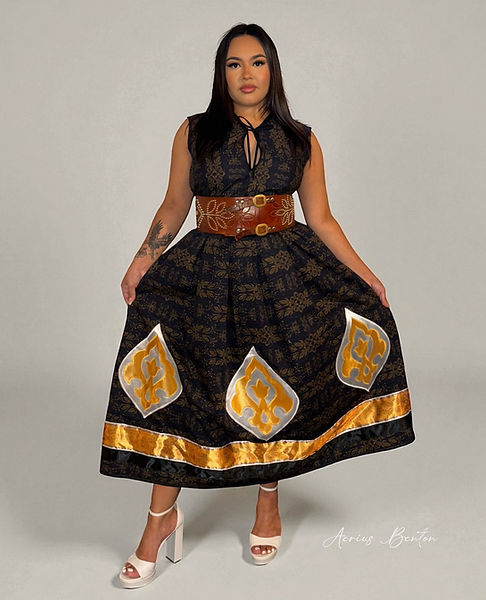
I am excited to present the contemporary ribbon dress designed for the runway, a true reflection of the modern styles we embrace today.
These modern dresses not only define our current fashion landscape but also resonate deeply with my personal values. While modesty holds significant importance for me, especially during traditional ceremonial occasions, I believe in the freedom to express myself based on my mood and feelings each day. This particular dress is one I would confidently wear to a gala or a red carpet event, combining elegance with a touch of my unique personality. It's a celebration of both style and self-expression, showcasing how fashion can beautifully intertwine with individuality.
The Nokomis Collection serves as a vibrant narrative of Ojibwe history, illustrating how these dresses, both utilitarian and beautiful, embody the enduring knowledge of our grandmothers passed down from generations. Each piece not only reflects the past but also inspires future generations to pick up what was left by our grandmothers, mothers, aunts and sisters. The ties to our women’s teachings is also reflective of the modest and functional nature of these dresses.